Piping infrastructure in Montclair represents over a century of evolving residential plumbing standards. In homes throughout the township, it is common to find original galvanized iron risers connected to mid-century rigid copper, transitioning into modern PEX expansions in remodeled kitchens and baths. When pipes age, internal pitting and exterior oxidation make them vulnerable to failure. Without precise non-invasive diagnostics, repairing a leaking pipe can turn into widespread demolition. At NJ Leak Detection, our detection-first methodology pinpoints the exact failure before any cutting begins, ensuring leak detection in Montclair remains clean, targeted, and economical.
Common Causes of Pipe Leaks in Montclair Residences
Understanding why pipes deteriorate helps homeowners take timely action before catastrophic water damage occurs:
- Copper Pinhole Corrosion: Over decades, chemical reactions between treated municipal water and interior copper surfaces create microscopic pit marks, eventually requiring pinhole leak repair Montclair specialists to address.
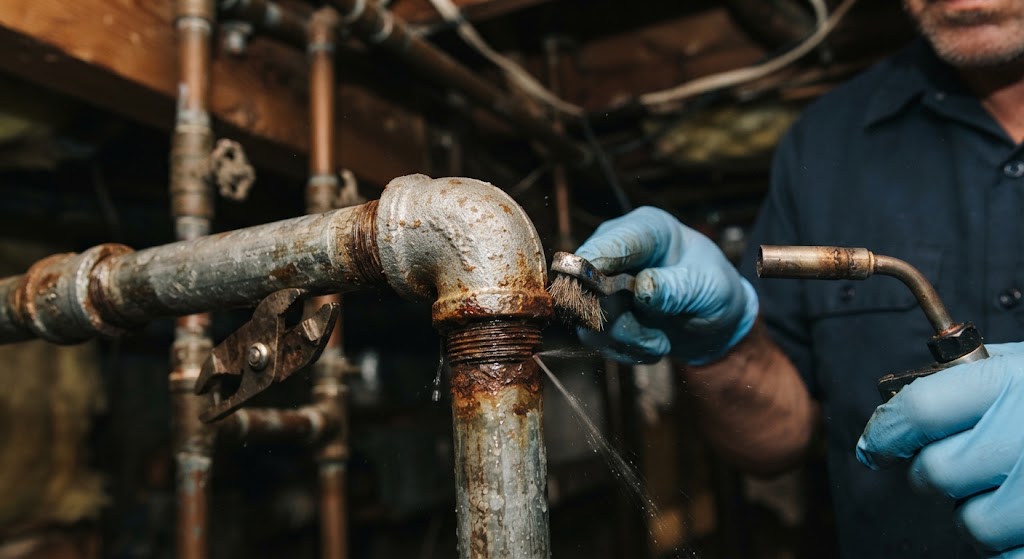
- Galvanized Steel Tuberculation: Older homes in Montclair Center and South End frequently retain galvanized lines that corrode from the inside out, narrowing water volume and rusting through at threaded elbow joints.
- Winter Freeze and Thaw Splits: Harsh northern New Jersey winters subject pipes in exterior wall chases, unheated attics, and crawl spaces to severe thermal contraction, leading to sudden burst pipe repair Montclair NJ emergencies.
- Mechanical Fitting & PEX Expansion Failures: Defective crimp rings, improper brass-to-plastic adapters, or water hammer vibrations can loosen pressurized connections behind appliances.
Warning Signs You Need Leaking Pipe Repair
Early warning signs often appear long before a pipe completely fractures:
- Low Flow or Discolored Water: A sudden drop in household water pressure or rust-colored water when opening faucets, indicating severe internal pipe corrosion.
- Hissing Sounds Behind Baseboards: Faint whistling or rushing sounds inside walls when all plumbing fixtures are turned off.
- Localized Wall Softening: Swelling drywall, spongy wood trim, or crumbling plaster along vertical pipe chases.
- Mold Rings on Ceilings: Concentric brown or yellow rings appearing under upper-level plumbing runs requiring prompt leaking pipe repair Montclair homeowners can rely on.
Noticed a Dripping Pipe or Moisture Staining?
Don't wait for a pinhole leak to cause extensive ceiling collapse. Speak with our diagnostic team today.
The Detection-First Approach to Pipe Repair
We never recommend cutting into walls based on guesswork. Our systematic diagnostic approach ensures minimal disruption:
- Static Pressure Testing: Precision digital gauges test isolated cold and hot supply lines to confirm pressure loss down to fractions of a PSI.
- Acoustic Contact Amplification: Sensitive contact probes listen directly to pipe valves, manifolds, and exposed fittings to isolate high-frequency acoustic signatures created by escaping water.
- Thermal Differential Scanning: Infrared imaging traces thermal patterns along floor and wall assemblies to visualize hot or cold water plumes radiating from the pipe breach.
- Marking the Target: The exact failure point is marked directly on the surface, allowing a licensed plumber to make a neat, surgical opening without disturbing surrounding structures.
Repair Options: Section Patch vs. Replacement vs. Repiping
Once the leak is isolated, property owners face three primary repair paths based on pipe material, age, and overall structural condition:
1. Localized Section Replacement: When an otherwise healthy copper or PEX line suffers physical damage or a localized freeze split, a licensed plumber can cut out the damaged segment and solder a replacement section or install press-fit mechanical couplings.
2. Branch Line Replacement: If an entire vertical riser or bathroom branch exhibits widespread pitting, replacing that specific run with flexible PEX eliminates future pinholes without necessitating full-house demolition.
3. Whole-Home Repiping: In homes with deteriorating galvanized steel or brittle polybutylene piping, selective repiping is often the most cost-effective long-term safeguard against recurring leaks. In New Jersey, plumbing work requires a licensed master plumber . If you face active flooding, consult our emergency leak repair section immediately.
Cost Factors in Pipe Leak Repairs
The investment required for pipe repair varies according to technical factors rather than standard flat rates:
- Accessibility of the Ruptured Pipe: Pipes located within open basement joists require significantly less labor to access than risers concealed behind bathroom tile or brick chimneys.
- Pipe Composition & Diameter: Working with thick vintage copper or threaded galvanized pipe requires specialized cutting tools and transitional fittings compared to modern PEX.
- Extensiveness of System Corrosion: Isolated fissures can be repaired quickly, while systemic pipe wall thinning requires broader line replacement to ensure sound connection points.
- Permitting & Code Compliance: Extensive piping modifications require township permits and inspections in compliance with New Jersey Uniform Construction Code standards.
Prevention Tips: Protecting Montclair Pipes
Proactive maintenance helps prevent unexpected pipe failures:
- Maintain indoor heating at a minimum of 55°F throughout winter months, even when away on vacation.
- Install water hammer arrestors on high-demand washing machine and dishwasher valves to eliminate hydraulic shock waves.
- Disconnect and drain outdoor garden hoses from exterior hose bibs before the first freeze in November.
- Have a professional inspect water pressure annually; install a pressure-reducing valve if township municipal pressure exceeds 70 PSI.
When Does a Pipe Leak Demand Emergency Response?
A slow seep allows for scheduled diagnostics, but an active pressurized split requires immediate emergency intervention. If water is spraying uncontrollably behind drywall, cascading through light fixtures, or causing ceiling plaster to sag, shut off the home's main water supply valve immediately and call our direct line at (201) 510-1615.
Neighborhood Relevance Across Montclair
Pipe leak issues are prevalent in neighborhoods throughout Montclair. Stately historic estates in Upper Montclair often have extensive copper plumbing systems that are several decades old, while colonial residences along Watchung Plaza and the Walnut Street corridor frequently face transitions between vintage galvanized lines and modern additions.
Frequently Asked Questions About Pipe Leak Repair
What causes pinhole leaks in residential copper plumbing pipes?
Pinhole leaks in copper pipes typically develop due to internal pitted corrosion caused by chemistry interactions between treated municipal water, dissolved oxygen, and turbulence near sharp pipe bends or aging solder seams.
Should I repair a leaking pipe section or consider whole-home repiping?
An isolated physical trauma or localized freeze split is ideal for single-section replacement. However, if your home has original galvanized pipes or exhibits multiple recurring pinholes across different branches, selective repiping with PEX provides a permanent, cost-effective solution.
Why do pipes burst during New Jersey freeze-thaw cycles?
When water freezes inside a pipe, it expands by approximately nine percent. The ice creates an impermeable blockage, causing extreme hydraulic pressure to build up between the freeze plug and closed faucets until the copper or PEX wall ruptures.
Does New Jersey require a licensed plumber to replace damaged water pipes?
Yes. Plumbing work in New Jersey requires a NJ licensed master plumber to ensure all installations meet strict state plumbing subcode regulations and protect drinking water safety.
Need Local Pipe Leak Pinpointing in Montclair?
Pinpoint pipe leaks cleanly before undertaking costly wall demolitions. Call our diagnostic specialists today.