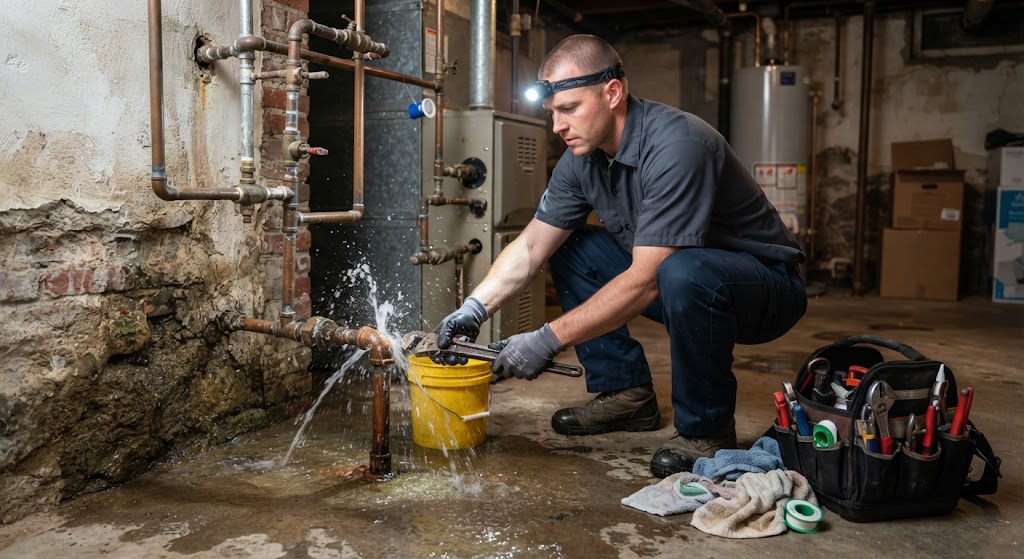
When a pressurized domestic water pipe fractures inside an older Montclair home, minutes count. Hundreds of gallons of water can cascade through multi-story ceilings, saturate structural timbers, and ruin irreplaceable historic architectural plaster. In the middle of a plumbing crisis, panic often leads homeowners to make hurried decisions. Knowing the exact sequence of immediate safety steps and contacting our specialized diagnostic team ensures rapid containment. With advanced leak detection in Montclair, we help you isolate the emergency source quickly, limiting structural damage and insurance loss.
Immediate Action Checklist: What to Do First
If you are experiencing an active water leak emergency Montclair NJ incident, take these critical containment actions right away before calling for assistance:
- Shut Off the Main Water Supply: Locate your primary interior water shut-off valve—usually located in the basement where the water line enters through the front foundation wall—and rotate the valve clockwise until flow ceases completely.
- De-energize Electrical Circuits: If water is leaking near light fixtures, wall switches, outlets, or furnace equipment, turn off electrical power to those zones at the main breaker box from dry standing ground.
- Open Faucets to Relieve Hydraulic Pressure: Open the lowest fixtures in the house, such as a basement utility sink or outside sillcock, to drain residual water away from upper-floor pipe breaches.
- Relocate Valuables & Protect Floors: Move furniture, rugs, electronics, and heirloom artwork away from water pathways; place catch buckets beneath active ceiling drips.
- Call Our Montclair Diagnostic Specialist: Dial (201) 510-1615 immediately so our technicians can guide you through stabilizing the situation and prepare diagnostic pinpointing equipment.
Common Emergency Leak Scenarios in Montclair
Residential emergency calls in Montclair often stem from specific housing characteristics:
- Winter Burst Pipe Emergencies: Sub-freezing temperatures in northern New Jersey cause uninsulated pipes along exterior walls or in drafty attics to freeze and split, triggering a burst pipe emergency Montclair crisis when ice thaws.
- Ceiling Collapses from Hidden Bathroom Leaks: Water pooling undetected above horsehair plaster or drywall ceilings suddenly causes large plaster sections to collapse under water weight.
- Main Service Pipe Ruptures: Sudden fractures in underground copper or lead service lines that push pressurized water into basements through stone foundation mortar.
- Pressurized Water Heater Line Breaks: Corroded supply nipples or failed temperature-and-pressure relief valves dumping hot water rapidly into finished cellars.
Local Montclair Housing and Winter Climate Factors
Montclair's classic early-twentieth-century estates often feature sprawling layouts with extended plumbing runs traversing unheated attic spaces and cold exterior overhangs. When sustained arctic cold fronts sweep over Essex County, standard wall insulation can fail to prevent sub-freezing temperatures from penetrating wall cavities. When pipes freeze, the expanding ice plug exerts extreme hydraulic force on solder joints, causing pipes to split along their longitudinal seams. Having emergency leak detection Montclair specialists locate the exact split prevents unnecessary demolition of frozen walls.
Active Water Flooding Your Montclair Home?
Shut off your main valve and call our local diagnostic line immediately for prompt stabilization guidance.
What Happens When You Call Our Emergency Line
When you contact our direct line at (201) 510-1615 during an emergency, you speak directly with a knowledgeable local diagnostic specialist:
We will first verify that your main water supply is successfully isolated and that electrical hazards are controlled. We will ask targeted questions regarding the location and symptoms of the leak. Our technicians arrive equipped with portable acoustic amplifiers, digital pressure manifolds, and infrared cameras ready to pinpoint the exact failure point. This diagnostic precision ensures that when a plumber arrives to make the physical repair, they open only a small, surgical access window.
How Rapid Pinpointing Limits Damage and Supports Insurance
In an emergency, property owners often face immense stress regarding insurance coverage and remediation costs. Engaging professional acoustic and thermal diagnostics offers critical advantages:
Minimizing Restoration Costs: Pinpointing the leak down to the exact stud bay prevents contractors from tearing out entire walls or destroying historic hardwood flooring in search of the breach.
Comprehensive Insurance Documentation: Homeowner policies typically cover sudden and accidental water discharges, but adjusters require objective proof of the failure mechanism. We provide clear technical diagnostic reports, including infrared thermal images and acoustic logs, that clearly verify the origin of the pipe rupture. For follow-up repairs, see our pipe leak repair and basement leak detection guides. In New Jersey, physical plumbing repairs must be executed by a NJ licensed master plumber .
Cost Factors in Emergency Leak Scenarios
Diagnostic investment during an emergency depends on structural accessibility and technical complexity:
- System Isolation Status: Homes with working quarter-turn ball valves allow quick zone isolation, whereas seized gate valves require broader system depressurization.
- Structural Complexity: Tracing pipes embedded behind multi-layer tile assemblies, brick chases, or radiant floor concrete takes more diagnostic time than open basement joists.
- Multi-Story Water Migration: In expansive three-story residences, mapping water migration across several floor levels requires systematic moisture meter profiling.
- Underground vs. Interior Location: Interior breaks are resolved through acoustic and thermal scanning, while exterior service breaks may require outdoor tracer gas profiling.
Preventing Future Emergency Plumbing Disasters
Take proactive steps to protect your property against future plumbing emergencies:
- Tag your main interior water shut-off valve with a bright, visible label; ensure every member of your household knows where it is located and how to operate it.
- Install modern automatic smart water shut-off valves that detect continuous flow and shut off incoming water supply automatically.
- During extreme winter cold spells, open vanity and cabinet doors beneath sinks along exterior walls to allow warm room air to circulate around plumbing pipes.
- Have an annual pressure test performed to verify that incoming municipal pressure does not exceed 65 PSI.
Safety Priority: Gas vs. Water Leaks
Our diagnostic services focus exclusively on domestic drinking water and drainage infrastructure. If you smell natural gas (a distinct rotten egg odor) or hear a hissing gas line, do not attempt to locate the leak. Evacuate all occupants from the building immediately, do not operate light switches or electrical equipment, and dial your local gas utility or 911 immediately from a safe outdoor distance.
Montclair Neighborhood Emergency Relevance
Emergency pipe ruptures occur across all residential districts of Montclair. In Upper Montclair and near Brookdale Park, historic multi-story homes frequently experience winter freeze splits in attic pipe runs. In Montclair Center, Watchung Plaza, and the South End, aging supply stacks and vintage galvanized connections in multi-family and commercial properties often experience sudden pressure fractures that require prompt diagnostic intervention.
Frequently Asked Questions About Emergency Leak Repair
What is the very first step I should take when a pressurized pipe bursts?
Immediately locate and turn your main water shut-off valve clockwise to cut incoming water flow. If water is pooling near electrical fixtures, outlets, or basement panels, shut off electricity to those circuits from the main breaker panel from dry ground.
Where is the main water shut-off valve usually located in a Montclair home?
In Montclair residences, the main water shut-off valve is typically located in the basement or utility cellar along the front foundation wall, positioned directly where the municipal copper or lead service pipe enters from the street.
How does non-invasive leak detection help with homeowner insurance claims?
Our diagnostic team generates detailed technical documentation, including thermal imaging photos, acoustic frequency readings, and exact structural fault coordinates. This objective proof verifies sudden and accidental plumbing pipe failure, which adjusters require for coverage.
What should I do if I suspect a natural gas leak while investigating a water problem?
Leave the building immediately. Do not touch light switches, open garage doors, or use phones inside. Once at a safe distance outdoors, contact your local gas utility company or dial 911 immediately.
Facing an Active Water Leak Emergency in Montclair?
Shut off your main valve and call our diagnostic line now. Speak directly with a local specialist.